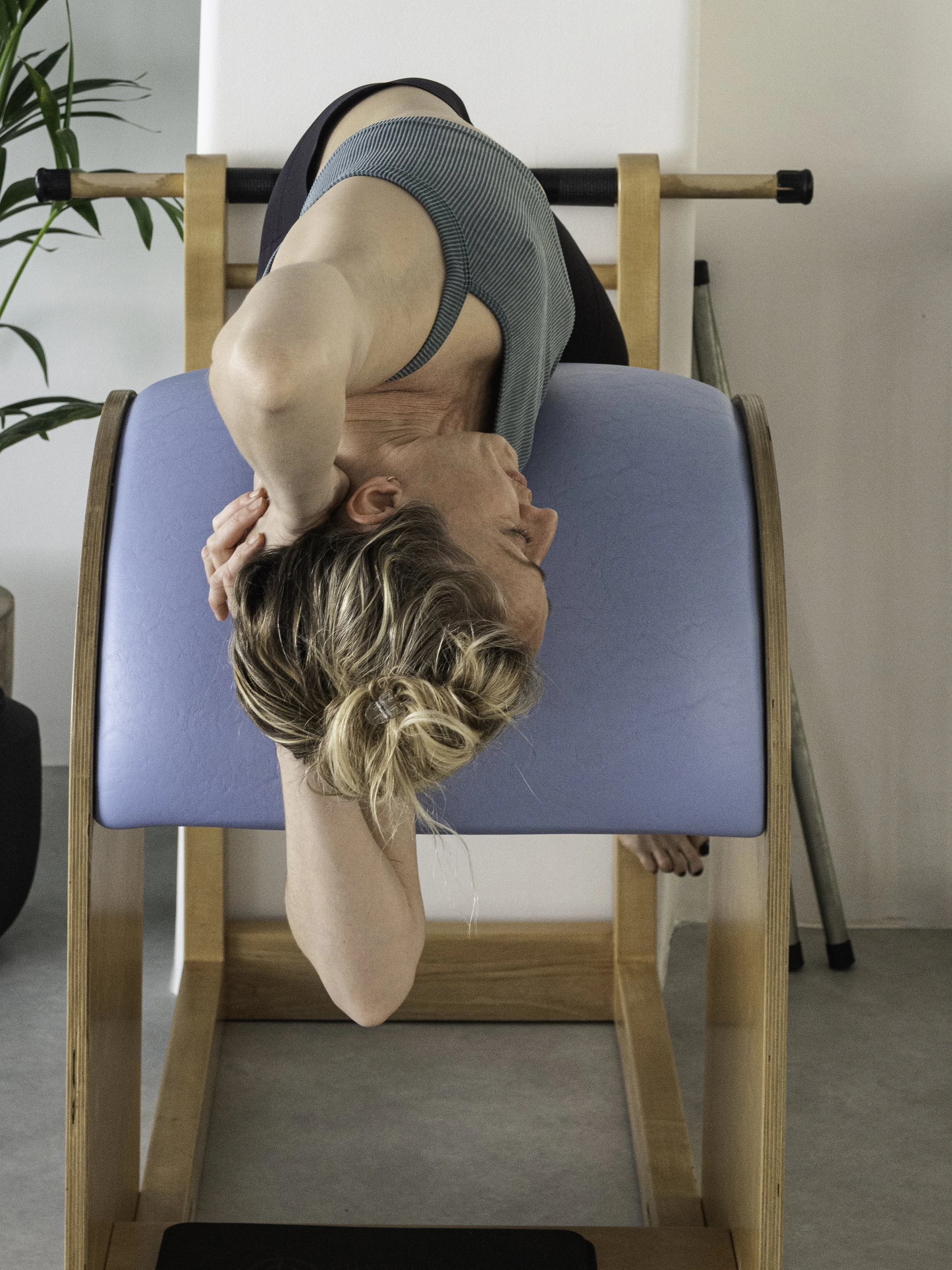
Somatic Therapy + Nervous System Regulation
Autoimmune conditions, chronic pain, and long-held stress don't behave like an injury with a site and a timeline. They move — flaring in one place this season, another the next. A body living with one isn't broken in a fixed spot. It's holding something ongoing, and holding it differently depending on the day.
What "somatic" actually means here
Not talk therapy, and not passive relaxation. Somatic work uses slow, small movement and sensory awareness to help you notice what's actually happening in your body in real time — where there's guarding, where there's numbness, where a breath doesn't quite complete. That noticing is the work. A body that's been overriding its own signals for years — pushing through, powering past, staying "fine" — has usually lost some of that felt awareness. This practice rebuilds it, gradually and at a pace the nervous system can actually tolerate.
Why the nervous system is part of every session, not a separate track
A body in a stress response inflames and guards more easily. Autoimmune flares and nervous system dysregulation feed each other — which means movement work that only targets the joint and ignores the state of the nervous system is treating half the picture. Regulation here means widening your capacity to be in your body without bracing against it: recognizing activation early, having tools to settle rather than override, and building a baseline that can absorb a harder day without spiraling into a flare.
Good for:
Chronic pain or recurring injury that keeps finding a new way back in
Autoimmune and inflammatory conditions that don't respond to a fixed program
Trauma history and long-term stress patterns held in the body
A nervous system that won't settle no matter what you've already tried
High-functioning people who've learned to override pain and stress signals rather than feel them
This isn't an add-on to the physical work. It's part of the conversation from the first session, not something we get to later.
Common questions
Is this a substitute for therapy or medical treatment? No — it complements both. This is body- based work; it doesn't replace talk therapy, psychiatric care, or medical management of an autoimmune or chronic condition.
What does a session actually involve, physically? Slow, guided movement, breath work, and attention to physical sensation — much gentler and slower-paced than a typical Pilates or yoga session, and adjusted in real time to what your nervous system can tolerate that day.
I don't have a trauma history — is this still relevant to me? Yes. Chronic pain, autoimmune flares, and long-term stress all register in the nervous system whether or not there's a specific traumatic event behind them.
“Their attention to detail and commitment to quality truly stood out. We’ve already recommended them to others.”
— Former CustomerGet In Touch
If you're interested in working with us, complete the form with a few details about your project. We'll review your message and get back to you within 48 hours.