Pilates
Rediscover strength and control, not just flexibility.
Most people who've "done Pilates" before have done the version aimed at the muscles you can see working — the ones that move you. Pilates done this way targets the ones you can't see working: the deep stabilizers along the spine, the pelvic floor, the muscles that hold a joint in place while something else moves it. Those are the muscles that go quiet first after an injury, a pregnancy, or years of compensating around pain — and a body missing them will keep rerecruiting the wrong muscles for the job no matter how strong those other muscles get.
We activate the stabilizing muscles that have gone quiet, and give the overworked ones room to rest. It feels slower at first. It holds. So we start by giving your body evidence: a joint the nervous system can trust to control the range it already has, before we ask for more.
What a session actually looks like
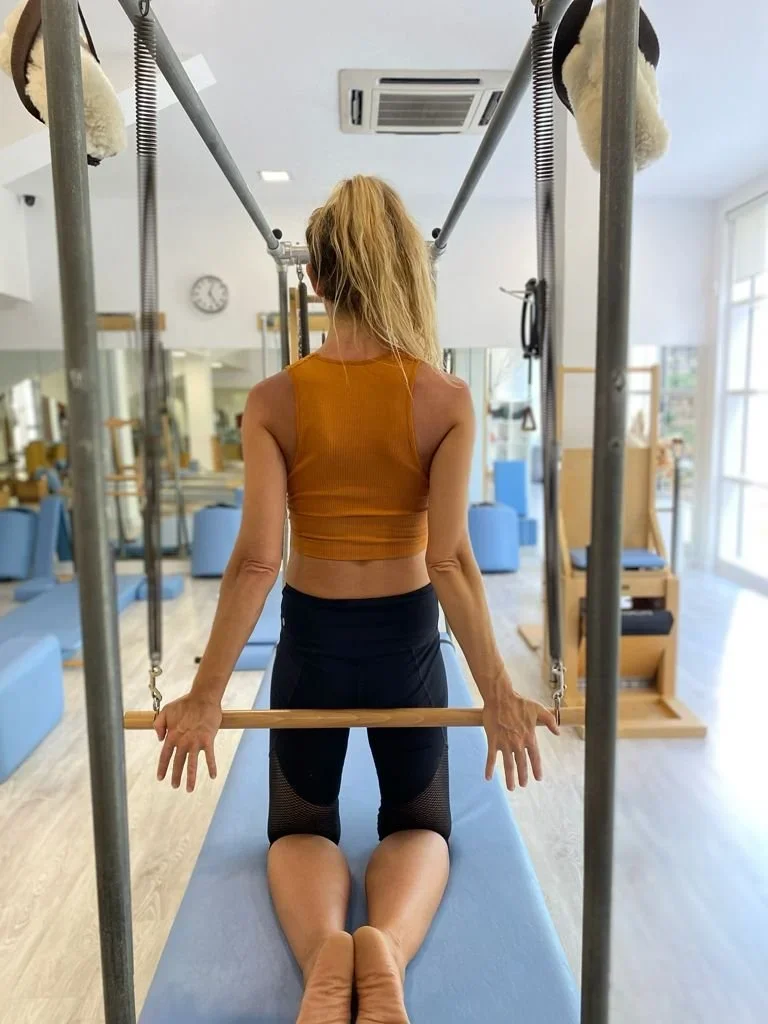
Work moves between reformer and mat, depending on what your body needs that day — the reformer's spring resistance for controlled, traceable load; the mat for the version of the exercise your body has to hold up without a machine helping. Every exercise comes back to the same handful of principles: breath that drives the movement instead of getting held through it, precision over repetition, and control through the entire range rather than momentum carrying the last third of it. A session is rarely more than a dozen exercises. It's rarely fast.
Good for:
Restoring mobility and confidence after injury or surgery
Alleviating chronic spine or joint discomfort, including scoliosis and disc issues
Pregnancy and postpartum recovery — rebuilding the deep core and pelvic floor specifically
Improving posture and balance for people who sit or stand for long stretches
Cross-training for athletes and dancers who need control, not just more load
Building strength the nervous system will actually let you keep
Common questions
How is this different from a gym Pilates class? Group mat classes are built for a room. This is built for your spine, your history, your specific compensations — the pace and the exercise selection change based on what I'm actually seeing in your body that day, not a fixed sequence.
Do I need Pilates experience, or a baseline level of fitness? No. Most people start here after something else hasn't held — an injury, a surgery, a pain that keeps returning. The work meets you at your current range, not a beginner's version of an advanced one.
How often, and for how long, before I feel a difference? Most people notice a change in how a specific movement feels — sitting, walking, reaching overhead — within a handful of sessions. Lasting structural change, the kind that holds up outside the studio, is usually a matter of months of consistent work, not a single reset.